
Paper games · Real-world rules
Kat Zero rules — crosses, circles and three in a row
کٹ زیرو
Also called Tic-tac-toe, Noughts and crosses, Cross and zero.
Kat Zero is the familiar three-in-a-row game played on a three-by-three grid. Two players take turns marking empty squares, one with a cross and the other with a circle. Complete a horizontal, vertical or diagonal line to win. When every square is filled without a line, the game is a draw.
At a glance
- Players
- 2
- Suggested age
- 5+ with guidance
- Allow about
- 5–15 minutes
- Where
- Indoor table, Classroom, Travel break
- Equipment
- Paper · Pen or pencil
Jump to a rule
What you need
- Draw two vertical and two horizontal lines, leaving nine similar-sized spaces. Choose symbols that are easy to tell apart. You can use X and O, initials or simple pictures, as long as each player keeps the same symbol throughout the game.
- One small grid is enough for learning. For a match, draw several grids before starting and add a score column at the side. This keeps old results visible and stops a later scribble being mistaken for an unfinished move.
Setup
- Decide who starts with a toss or alternate from your previous game. A starting advantage should not become a habit where the older player always moves first. For our suggested match, play six games and alternate the starter each time.
- Explain that a mark becomes final when the player finishes writing it. Nobody erases a move after seeing the reply. In a practice game, both players may agree to undo before continuing; label it practice so the score does not become confusing.
- Point out all eight possible winning lines together: the three rows, three columns and two long diagonals. A bent line around a corner does not count, and a row can win even when it is not in the centre.
How to play
- The first player marks one empty square. The other player marks a different empty square. Take one move at a time and keep the marks inside their boxes so the board is easy to read.
- After every move, check whether that player now has three marks on a straight winning line. If yes, circle or highlight that line and stop immediately. The other player does not receive a reply move after the win.
- If there is no win, pass the turn. Before choosing a square, look for two of your own marks with one empty space in their line. Completing that line is an immediate win, even if another part of the board looks dangerous.
- If you cannot win immediately, check whether your opponent has such a line and block it. For a practice example, two crosses across the top row require a circle in the remaining top square unless circles can already win somewhere else.
- When all nine squares are occupied with no winning line, record a draw. Clear the board or move to the next grid, swap the starting player and keep the symbols easy to identify.
Scoring / how to win
- One game ends in a win, loss or draw. For our suggested short match, give one point for a win and half a point to each player for a draw. Highest total after six games wins; this match scoring is a house format.
- Example: Ali wins twice, Sara wins once and they draw three games. Ali has 3.5 points and Sara 2.5. The drawn games count for both players equally, so nobody is encouraged to pretend a full board has a hidden extra move.
House rules & regional variations
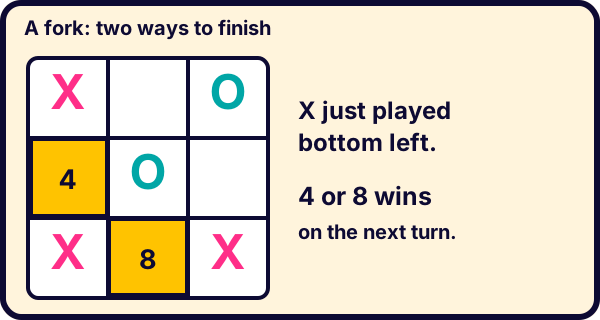
- A fork creates two different winning threats at once. To study one, label the top row 1–3, middle 4–6 and bottom 7–9. With X at 1 and 9, O at 3 and 5, an X at 7 threatens both square 4 and square 8.
- Larger boards and longer winning lines are separate variants. They need a new rule about how many marks form a win. Keep the standard three-by-three game for a first lesson; extra squares do not automatically make the same strategy work.
Tips & strategy
- Check an immediate win before blocking. It is easy to spend your turn preventing a threat while overlooking a line you could already complete. Say “win, block, then plan” during a slow practice round if it helps.
- Try playing both sides of a saved position on paper. Mark a possible move lightly, examine the reply, then restore the original board. This is a useful learning exercise, but do not do it with hidden extra moves during a scored game.
Safety & fair play
- Use a stable writing surface and keep pens away from younger children's faces. A draw is a normal result, not evidence that somebody played badly. Perfect play in ordinary tic-tac-toe can end in a draw; there is no need to invent a winner.
Questions before the first round
Does a diagonal count?
Yes. Either long corner-to-corner diagonal is a winning line when all three marks belong to the same player.
Can I move a mark already placed?
Not in the standard game. Agree any learning undo before the next move rather than changing a finished result.
What is a fork?
A move that creates two separate immediate winning threats. The opponent may be unable to block both with one mark.
Who starts after a draw?
Our match alternates the starter after every game, including draws. Use the same arrangement for the entire match.
Can we play without paper?
Yes. Open Kat Zero on chai.games for a digital board. The paper guide still works when you want to play face to face without a screen.
Sources & further reading
Try another game
Paper games · 2 players
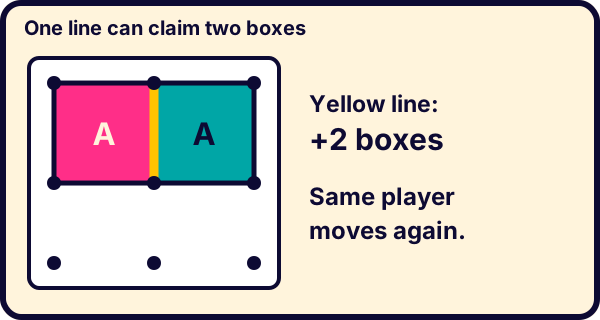
Dabba rules — dots, boxes and extra turns
Join dots, complete boxes and take another turn. Learn Dabba scoring, two-box moves and a simple chain example on a small paper grid.
Read the rules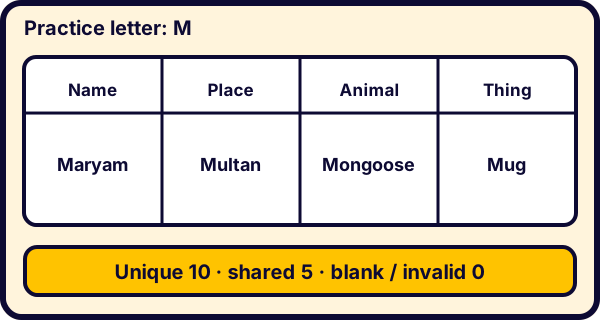
Paper games · 2–10 players
Name Place Animal Thing rules and scoring
Choose a letter and fill Name, Place, Animal and Thing. Includes 10/5/0 scoring, duplicate examples, Urdu rounds and fair answer checks.
Read the rules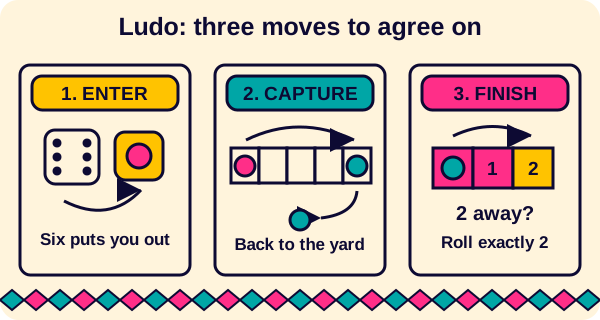
Board games · 2–4 players
Ludo house rules — settle them before the six
A clear Ludo starter format, plus the house choices that cause arguments: entry sixes, safe squares, blocks, bonus rolls and an exact finish.
Read the rules