
Board games · Real-world rules
Ludo house rules — settle them before the six
لڈو
Also called Ludo, Luddo, Ludo ghar ke rules.
Ludo sends four tokens from your yard, around a shared track and into your own home lane. The first player to bring all four home wins. The arguments usually concern the extras: safe squares, blocks and bonus rolls. This guide gives one beginner house format and lists the decisions to make before playing. Your printed set may use different rules. Ages and session times below are practical estimates.
At a glance
- Players
- 2–4
- Suggested age
- 6+ with help counting
- Allow about
- 20–45 minutes
- Where
- Home, Classroom games corner, Picnic table
- Equipment
- Four-colour Ludo board · Four matching tokens per player · One six-sided die
Jump to a rule
What you need
- Use a complete board, one ordinary die and four matching tokens for each player. A tray keeps the die on the table. Two to four people can use a standard four-colour board.
- Point out each colour's yard, entry square, travel direction, private home lane and final home space. Follow the arrows on your board. Do a practice lap with one token before anyone starts scoring a win.
Setup
- Each player chooses a colour and puts all four tokens in its yard. Roll once each; highest starts, with tied players rolling again. Turns then move clockwise around the table.
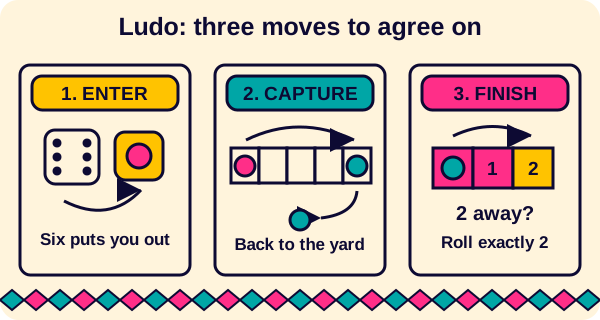
- For this starter format, a six places one waiting token on its entry square. It does not move another six squares on that same roll. You may instead use the six to move a token already travelling.
- Agree that clearly marked safe stars and the colour entry squares are safe. All other shared squares allow capture. For simplicity, this house format has no blocking stacks, no capture bonus and no three-sixes penalty.
How to play
- Roll the die in view of everyone. If it leaves the tray or rests tilted, roll it again before moving anything. This reroll convention is a table agreement, not a way to reject an inconvenient result.
- Choose one token and use the whole number on it. Do not split a four into two moves of two. Count the next square as one; the token's current square does not count.
- A six gives another roll after you use it to enter or move. Any other number cannot release a token in this format. If no legal move is available, pass; a rolled six still earns its extra roll.
- Landing exactly on an opponent on an unsafe square sends that opponent's token back to its yard. Passing over a token does not capture it. On a safe square, different colours may share the space.
- Without the optional blocking rule, occupied squares can be passed. Tokens sharing a square do not form a wall. Our starter agreement returns every opposing token on an unsafe landing square; agree before using stacks.
- After completing the route, turn into your own coloured home lane. Other colours cannot enter it. You need the exact number to finish: from two spaces away, a two gets home, while a three must move another token or go unused.
Scoring / how to win
- The first player with all four tokens home wins. No running points are needed. Continue for remaining places only if everyone agreed to do so before starting.
- For a shorter family session, use a clearly announced house race to bring two tokens home. Everyone still starts with four available tokens. Keep that finish condition visible so nobody discovers it halfway through.
House rules & regional variations
- Blocks: some sets make two same-colour tokens an impassable barrier. Decide whether a block can move together, whether it must split, and which squares permit it. Our starter format leaves blocks off.
- Three consecutive sixes: some tables cancel only the third roll, while others cancel the whole turn. Neither penalty is assumed here. If you add one, say exactly which earlier moves are undone.
- Extra rolls for captures or reaching home, a required capture before finishing, entry on one or six, and different safe squares are house choices. Some older printed rules also count the entry six as movement. Use your set's sheet or one agreed format consistently.
Tips & strategy
- Check how far an opponent could move before taking an unsafe square. A token one to six spaces behind may catch you next turn. Getting another token out gives you more choices on later rolls.
- Keep a finger beside the destination while counting, then move the token. Near home, compare all available moves before using a small number; that number might finish a token that larger rolls cannot move.
Safety & fair play
- Keep small tokens and dice away from children who put objects in their mouths. Play for points or bragging rights, and leave enough table space to avoid knocking the board during an excited roll.
Questions before the first round
Do I need a six to start?
Yes in this starter format. A six puts one token on its entry square and earns another roll.
Can I split a roll between tokens?
No. Use the entire roll on one legal move.
Does every Ludo board have the same safe squares?
No. Check the markings and agree which are protected before play.
What happens after three sixes?
Our starter rules keep the rolls. A penalty is an optional house choice that must be defined beforehand.
Can I overshoot home and bounce backwards?
Not here. Finishing needs an exact roll; use another token when possible.
Sources & further reading
Try another game
Board games · 2 or 4 players
Carrom rules — coins, queen and a clean finish
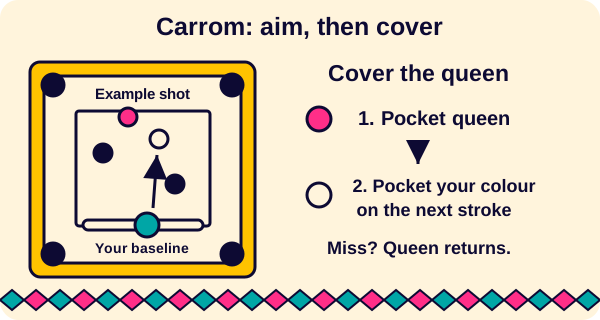
Learn carrom for two or four players: place the striker, pocket your colour, cover the queen, handle common dues and score a finished board.
Read the rules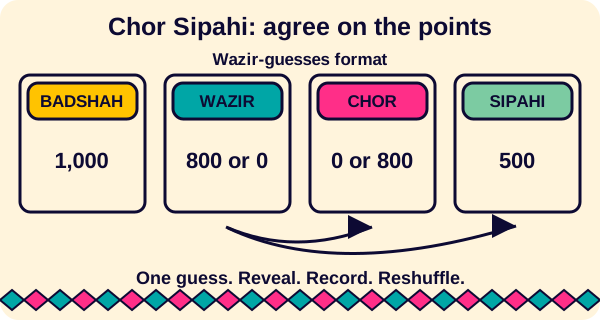
Party games · 4 players
Badshah Wazir Chor Sipahi — four chits, one guess
Make four secret role chits, let the Wazir find the Chor, and keep clear scores. Includes the Sipahi-guesses variant and larger-group options.
Read the rules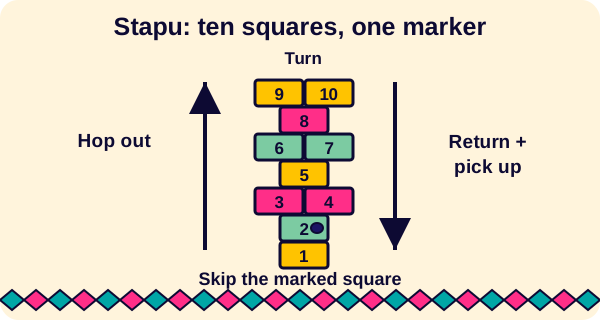
Street & outdoor · 1–6 players
Stapu rules — how to play hopscotch
Draw a stapu course, throw the marker and hop home. Clear rules for lines, paired squares, missed throws and younger players.
Read the rules