
Party games · Real-world rules
Badshah Wazir Chor Sipahi — four chits, one guess
بادشاہ وزیر چور سپاہی
Also called Chor Sipahi, Badshah Chor Wazir Sipahi.
Badshah Wazir Chor Sipahi is a seated guessing game for four people. Each player secretly draws a role, then one player tries to identify the Chor. Families disagree about who guesses and how many points change hands. This guide uses a Wazir-guesses format with an explicit score table, followed by other versions. Ages and times are suggested. Also called Raja Mantri Chor Sipahi in India.
At a glance
- Players
- 4
- Suggested age
- 6+ with help reading roles
- Allow about
- 10–20 minutes
- Where
- Home, Classroom, Family gathering, Train table with permission
- Equipment
- Four identical paper chits · Pen and score sheet · A small bowl, optional
Jump to a rule
What you need
- Write Badshah, Wazir, Chor and Sipahi on four equal pieces of paper. Use the same pen, paper and fold for all four so the outside gives nothing away. Keep a pencil and score sheet beside the bowl.
- Four players sit where they can see one another. A child who does not read confidently can use a crown, adviser, mask and shield symbol, with a private explanation from a helper before the first practice round.
Setup
- Agree on ten rounds, or another fixed total, before drawing. Write each player's name at the top of a score column. The roles will be shuffled again every round, so nobody owns a permanent title.
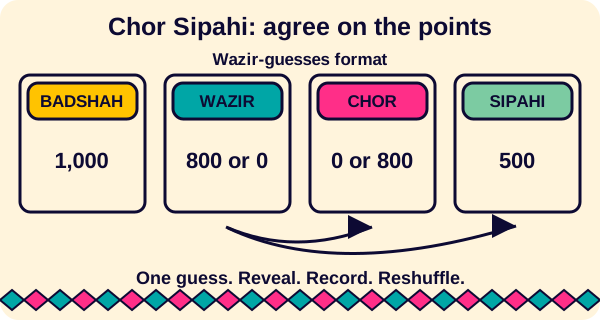
- Use this score table: Badshah gets 1,000; Sipahi gets 500; a correct Wazir gets 800 and Chor gets zero. If Wazir guesses incorrectly, Wazir gets zero and Chor gets 800. This is one documented format, not a universal table.
- Choose a silent reveal-and-guess round for the first lesson. Later you can allow a short conversation. Everyone must know that there is only one final guess and no looking inside another person's chit.
How to play
- Fold, mix and spread the four chits face down, or shake them in a bowl. Each player takes one and looks privately. Leave the folded chit in front of its owner after reading it.
- The Badshah reveals first and asks the Wazir to reveal. The two remaining players keep their roles hidden: one is Chor and one is Sipahi. The Badshah does not make the guess in this format.
- Give the Wazir a moment to look at the two possible players. For a brisk house round, allow up to thirty seconds. A younger player can have longer if that was agreed before dealing.
- The Wazir names one player as the Chor. Make the final choice clear before anyone opens another chit. The remaining two players then reveal together so the result can be checked.
- If the named person is Chor, use the correct-guess scores. If the named person is Sipahi, use the wrong-guess scores. For a timed round, agree that no guess by the deadline counts as incorrect.
- Read the four scores aloud while one person writes them. Add the round totals to the running scores, collect all chits and shuffle for the next round. Stop after the agreed total; highest cumulative score wins.
Scoring / how to win
- Example: Sara is Wazir and names the player holding Sipahi. Sara receives zero; the Chor receives 800; Badshah still receives 1,000 and Sipahi still receives 500. Only Wazir and Chor's allocation depends on the guess.
- This particular table distributes 2,300 points every round, so that sum is a useful arithmetic check. It does not apply to every house version. If final totals tie, share the win or play the extra rounds everyone agreed on beforehand.
House rules & regional variations
- Sipahi-guesses: Badshah and Sipahi reveal, leaving Wazir and Chor hidden. A common table keeps Badshah at 1,000 and Wazir at 800, while Sipahi's 500 transfers to Chor after a wrong guess. This changes both the guessing role and scoring.
- Different point tables: some Wazir-guesses versions give an unidentified Chor 500 rather than 800. Copy your chosen table onto the score sheet. Do not borrow the guess procedure from one version and its totals from another unnoticed.
- Larger groups: add extra Sipahi chits, leaving one Badshah, one Wazir and one Chor, then let Wazir choose among all hidden players. This is an expanded house format. Set fixed Sipahi points and recognise that a correct guess becomes harder with more candidates.
Tips & strategy
- Watch the game, but treat a smile or nervous laugh as a guess, never proof. People may act differently because they enjoy bluffing, feel shy or are simply trying not to laugh.
- Refold or replace chits when a crease, stain or torn edge gives a role away. Rotate who shuffles and who records scores. For younger players, run one open practice round with no points before hiding the roles.
- Keep your own reaction comfortable. You do not need to stare someone down or invent a story. In a talking round, agree that playful claims about the drawn roles are allowed, while showing the actual chit is not.
Safety & fair play
- Keep accusations inside the pretend game. Nobody owes a dare, slap, punishment or personal confession after a wrong guess. Stop or switch games if someone dislikes being the suspect; the Chor role says nothing about a real person.
Questions before the first round
Who finds the Chor?
Wazir in this guide. Some families give that job to Sipahi; choose one version first.
Can we play without paper?
Yes. A private pass-the-phone role tool can replace chits if each player sees only their own role.
Does the Badshah guess too?
No. Badshah reveals and calls the Wazir in this format.
Must a wrong guess lose all previous points?
No. It changes only that round's score; earlier totals remain.
Can five people join?
Use the extra-Sipahi house variant and agree on its score table before drawing.
Sources & further reading
Try another game
Card games · 3–8 players
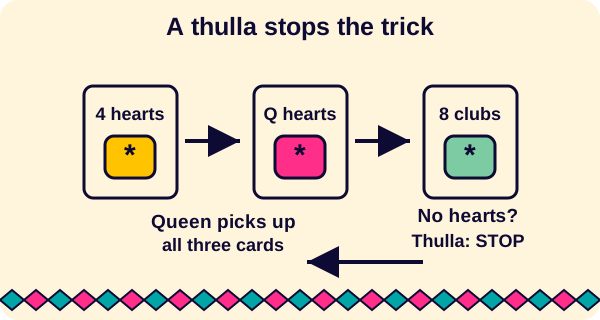
Bhabhi rules — how to play Get Away
Learn Bhabhi with clear examples: follow suit, stop on a thulla, pick up the pile and handle the opening round and final-card exceptions.
Read the rules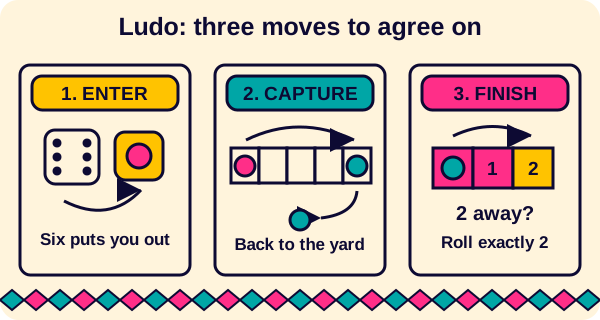
Board games · 2–4 players
Ludo house rules — settle them before the six
A clear Ludo starter format, plus the house choices that cause arguments: entry sixes, safe squares, blocks, bonus rolls and an exact finish.
Read the rules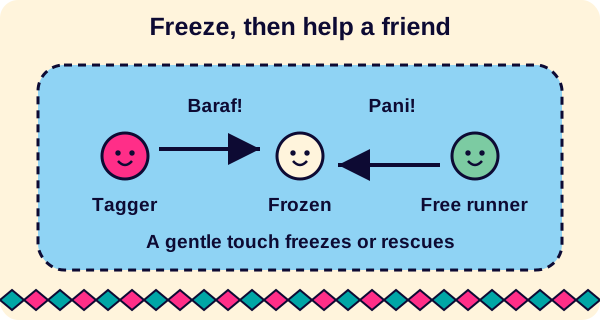
Street & outdoor · 4–16 players
Baraf pani rules — how to play freeze tag
Play baraf pani with clear tagging, freezing and rescue rules. Includes a simple round format, fair rescues and walking adaptations.
Read the rules