
Card games · Real-world rules
Bhabhi rules — how to play Get Away
بھابھی
Also called Bhabi, Bhabhi Thulla, Get Away, Getaway.
Bhabhi, also called Get Away or Thulla, is a card-shedding game: empty your hand and avoid being the final player still responsible for cards. Follow the led suit when you can. An off-suit card usually ends the trick and makes the highest led-suit player pick up the pile. The opening trick and last-card lead need special care. This guide uses a documented Getaway version; local rules can differ.
At a glance
- Players
- 3–8
- Suggested age
- 9+; younger players with help
- Allow about
- 15–35 minutes
- Where
- Home, Family gathering, Picnic table
- Equipment
- 52-card pack without jokers
Jump to a rule
What you need
- Use a standard pack of 52 cards without jokers for three to eight players. Aces rank highest, then K, Q, J, 10 down to 2. There is no trump suit in this version.
- Leave separate spaces for the current face-up trick and the old face-down discard pile. That distinction matters when someone has no cards but is still required to lead. Suggested ages and times are planning estimates.
Setup
- Deal the full pack as evenly as possible. Some players may receive one more card; that is normal when 52 does not divide evenly by the player count. Rotate the dealer between games.
- Arrange play clockwise. Players may look at their own cards but keep them private. The player holding the ace of spades must open with it.
- Explain the exceptions before starting: the first trick cannot be stopped by a thulla, and a player who empties their hand while still owning the next lead has not automatically escaped. Choose any alternative last-card rule now.
How to play
- Play the opening trick. Everyone contributes one card, following spades if possible; a player with no spade can play anything. Discard the whole opening trick, even if it contains another suit. The ace-of-spades player leads again.
- For later tricks, the leader plays any card. Each active player clockwise must follow that suit if able. If several cards fit, choose any one; there is no obligation to play higher.
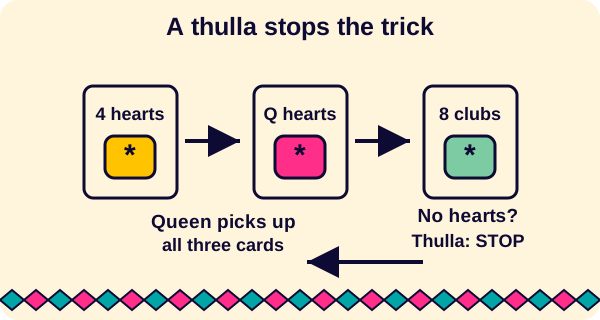
- The first player with no card of the led suit plays an off-suit card, or thulla. Stop the trick immediately. Players after that person do not add a card to this trick.
- Find the highest card of the original led suit. Its player takes every card already played to the stopped trick, including the thulla, into their hand. That player leads the next trick.
- If all active players follow suit, move the completed trick to the discard pile. The highest led-suit player leads next. Players who have no cards and do not owe the lead leave the game safely.
- If your final card wins a completed same-suit trick, draw one random card from the earlier discard pile and lead it. Do this before adding the latest trick to that pile. Continue until only one player remains responsible for cards.
Scoring / how to win
- Example: a trick starts with 4 of hearts, followed by queen of hearts. The next player has no hearts and plays 8 of clubs. The queen-of-hearts player picks up all three cards. The club does not become trump, and later players skip this trick.
- No running point score is necessary. The last remaining player loses that deal; everyone who got away is safe. If the final two players both use their last card in a same-suit trick, the lower card escapes and the higher-card player loses.
- Use neutral score labels such as 'deal lost'. The familiar game name is not a reason to insult a player or attach embarrassing punishments.
House rules & regional variations
- Some tables let an empty-handed leader draw from another player's hand instead of old discards. Others allow that player to escape while three or more players remain. These rules change the ending, so choose one system before dealing.
- A documented optional move lets a player take the complete hand of the next active player before a trick. That neighbour then escapes. Leave this advanced transfer out of a first teaching game unless everyone understands it.
- Clockwise and anticlockwise households both exist. Two-pack games need extra rules for tied cards and the opening ace. Stay with one pack while learning instead of improvising those cases mid-game.
Tips & strategy
- Track which players cannot follow each suit. Leading a high card into a known gap can bring the whole trick back to you. A low card is often useful because another player may take the next lead.
- Wait for your turn. Once an off-suit card lands, stop adding cards. Keep the current trick spread enough to identify the original suit and its highest card without guessing.
Safety & fair play
- Keep the game friendly and free of betting. Use clear verbal reminders for younger players rather than grabbing their cards. Leave any teasing or penalty tasks out of the rules.
Questions before the first round
Does a thulla act as trump?
No. It ends the trick. The player with the highest card of the original suit takes the pile; the off-suit card does not win it.
Can I play off-suit while holding the led suit?
No. You must follow suit whenever you can. Check your whole hand before declaring that you have none.
Can the first trick be stopped?
Not in the documented version used here. Everyone plays once and the opening pile is discarded, even if someone has no spade.
Am I out as soon as I play my last card?
Only if you are not still responsible for the next lead or a pickup. The last-card lead exception can keep you in.
Who wins when several players get away?
All escaped players avoid the loss. This format identifies one final loser rather than ranking every finisher by points.
Sources & further reading
Try another game
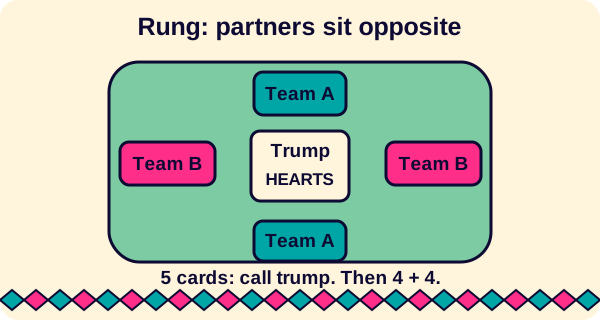
Card games · 4 players
Rung rules — how to play Court Piece
Learn four-player Rung: partners, the five-card trump call, following suit, seven-trick wins and the difference between Single and Double Sar.
Read the rules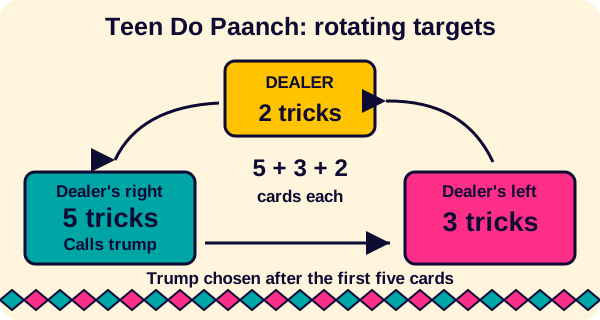
Card games · 3 players
Teen Do Paanch — three players, ten tricks
Learn 3-2-5 with a 30-card pack: who chooses trump, the two-three-five targets, following suit and exchanging cards after beating your quota.
Read the rules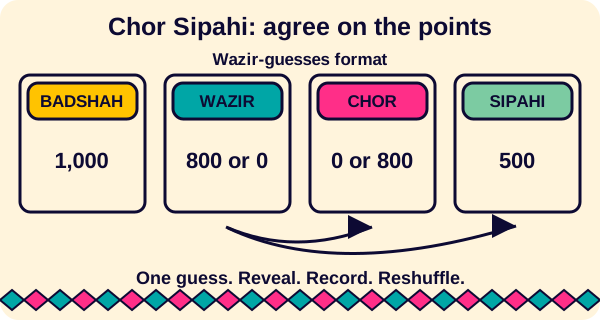
Party games · 4 players
Badshah Wazir Chor Sipahi — four chits, one guess
Make four secret role chits, let the Wazir find the Chor, and keep clear scores. Includes the Sipahi-guesses variant and larger-group options.
Read the rules