
Card games · Real-world rules
Teen Do Paanch — three players, ten tricks
تین دو پانچ
Also called Teen Do Panch, 3-2-5, 325.
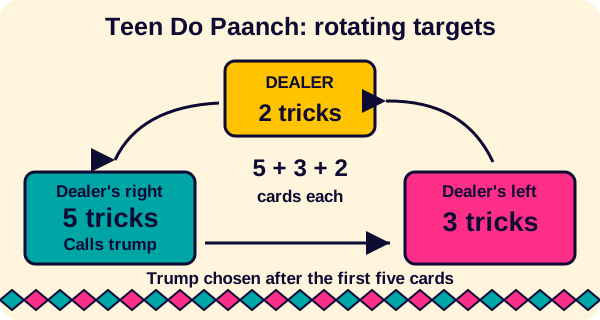
Teen Do Paanch gives three players different targets: two, three and five tricks. Beat your target and you earn a card exchange in the next deal. The targets rotate, so everyone gets a turn choosing trump. This guide uses ordinary low sevens and anticlockwise play; permanent high sevens are a separate variation. A trick means one card from each player, not the whole deal. Ages and times are planning suggestions.
At a glance
- Players
- 3
- Suggested age
- 10+; younger players with help
- Allow about
- 20–40 minutes
- Where
- Home, Family gathering, Picnic table
- Equipment
- Standard pack with 30 cards selected · Paper and pencil
Jump to a rule
What you need
- Keep A, K, Q, J, 10, 9 and 8 of every suit, plus the seven of hearts and seven of spades. That makes thirty cards. Set the remaining cards and jokers aside.
- Use three seats and space for each person's won tricks. Write down the targets before each deal: dealer two, player on the dealer's right five, player on the left three.
Setup
- Choose a first dealer and agree on three or six deals, so everyone gets equal turns in each seat. Within each suit, ace is highest, followed by king, queen, jack, ten, nine, eight and any seven.
- Shuffle and let the player on the dealer's right cut. Deal five cards to each person, starting on the right and moving anticlockwise. The five-trick player announces the trump suit using those first five cards.
- Deal another three cards each, then two each. Everyone now holds ten. From the second deal onward, settle any card pulls earned in the previous deal before playing the first trick.
How to play
- The player with the five-trick target leads any card. Each other player, moving anticlockwise, must follow the led suit if they have it. Without that suit, they may play any card, including a trump.
- The highest trump wins. If no trump appears, the highest card of the led suit wins. There is no requirement to beat an earlier card or use a trump when you cannot follow suit.
- The winner leads again. Put each won trick face down in a separate, countable group. Play all ten tricks; reaching your quota early does not end the deal.
- After counting, compare tricks with targets. For example, six tricks against a target of five earns one pull; two against a target of three owes one. The player who made exactly two against two owes nothing.
- On the next deal, after trump and all cards are dealt, the entitled player takes one unseen card from the owing player's hand and returns a different card. They must keep at least two cards of the returned card's suit. Repeat for each pull owed.
- When two players may pull, use this order: dealer's right, dealer's left, dealer. When choosing between two owing players, take from the dealer first, then dealer's left, then dealer's right. Skip anyone without a credit or debt. Everyone finishes with ten cards.
Scoring / how to win
- Record one point per trick taken. Quotas decide next-deal exchanges; they are not points deducted in this scoring format. Highest total after the agreed equal number of deals wins, with shared victory for a tie.
- Pass the deal to the right after every deal. Pulls belong to the players who earned them, even though their new targets change. There is no extra exchange after the final deal.
House rules & regional variations
- Permanent high sevens: some tables treat the heart seven as highest trump and the spade seven as second highest, regardless of their printed suits. Agree before dealing; this changes which suit those cards must follow.
- Other tables play clockwise, loosen the return-card restriction, or score tricks minus quota. These are different formats. Do not change the scoring method or exchange rule halfway through a session.
Tips & strategy
- Sort your first five cards by suit before choosing trump. Several cards in one suit can be more useful than a single impressive ace. Count both the length of the suit and its high cards.
- Keep the previous result beside the current targets. This prevents a common mix-up: the new five-trick player does not automatically inherit the old five-trick player's earned pulls. For a teaching deal, pause before each play and name the led suit.
Safety & fair play
- Play for points only. Keep drinks away from cards and stop teasing before it becomes personal. Allow extra thinking time while someone learns the difference between printed suit and trump.
Questions before the first round
Can four people play Teen Do Paanch?
This version needs exactly three. With four, Rung is a better fit; adding a fourth hand breaks the thirty-card and ten-trick setup.
Must I play trump when I cannot follow suit?
No. You may trump or discard another suit in the version taught here.
Can I return the card I just pulled?
No. Return another card, keeping at least two more cards of its suit in your own hand.
What happens if everyone meets their quota?
There are no pulls next deal. Record the tricks, rotate the dealer and shuffle again.
Are the two sevens always the strongest cards?
Only in the high-sevens variation. Here they remain ordinary low cards of hearts and spades.
Sources & further reading
Try another game
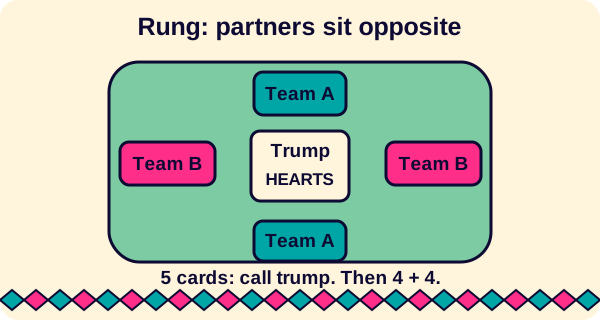
Card games · 4 players
Rung rules — how to play Court Piece
Learn four-player Rung: partners, the five-card trump call, following suit, seven-trick wins and the difference between Single and Double Sar.
Read the rules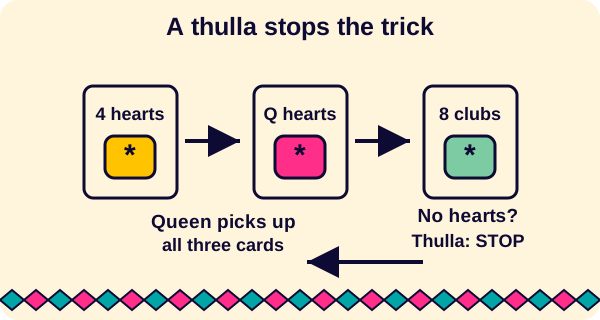
Card games · 3–8 players
Bhabhi rules — how to play Get Away
Learn Bhabhi with clear examples: follow suit, stop on a thulla, pick up the pile and handle the opening round and final-card exceptions.
Read the rules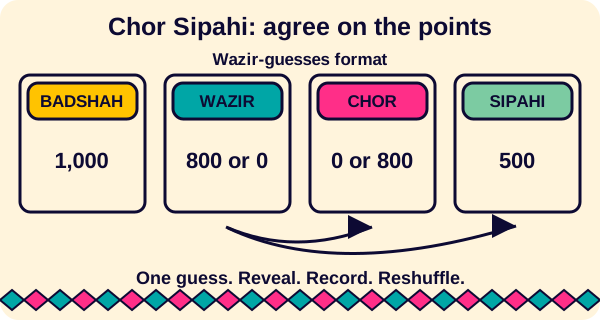
Party games · 4 players
Badshah Wazir Chor Sipahi — four chits, one guess
Make four secret role chits, let the Wazir find the Chor, and keep clear scores. Includes the Sipahi-guesses variant and larger-group options.
Read the rules