
Board games · Real-world rules
Carrom rules — coins, queen and a clean finish
کیرم
Also called Carrom board, Karrom, Carom board.
Carrom uses a finger-flicked striker to pocket your nine pieces before the other side clears theirs. The red queen needs a cover: an eligible player must follow her into a pocket with one of their own pieces. Learn one board first, then add match scoring. The rules below explain common situations; the linked federation laws settle unusual combined fouls. Suggested ages and times are estimates, not tournament limits.
At a glance
- Players
- 2 or 4
- Suggested age
- 8+ with adult help
- Allow about
- 20–40 minutes
- Where
- Home, Community room, Indoor games space
- Equipment
- Level carrom board with four pockets · Nine white and nine black carrommen · One red queen and a striker
Jump to a rule
What you need
- Use nine white pieces, nine black pieces, one red queen and a larger striker. Check that the board sits flat, its pockets hold pieces, and every player can reach their own baseline without leaning across someone else.
- Play singles with two people opposite each other, or doubles with four and partners opposite. Each side shares one colour. Three-player free-for-all games need separate house rules and are not the format taught here.
Setup
- Choose the first breaker by toss. The breaking side plays white; the other side plays black. Put the queen in the centre, surrounded tightly by six pieces and then twelve. Follow your set's starting diagram for the white Y arrangement.
- Sit at your assigned side throughout the board. In doubles, turns pass to the right, so opponents alternate. Use only board-approved powder as directed by the manufacturer, applied before the board begins.
- For a first session, agree to a best-of-three-boards house match. Alternate the breaking side each board. This short format counts board wins; the federation's points-based game is explained separately below.
How to play
- Place the striker on your own baseline, touching both parallel lines. If you use an end circle, cover it completely rather than partly. Keep the striker clear of other pieces, then flick it with a finger; do not push or drag it.
- After the break, pocketing your own colour with a legal stroke lets you shoot again. A miss ends your turn. An opponent's piece stays pocketed for them; if it is the only piece pocketed, your turn ends.
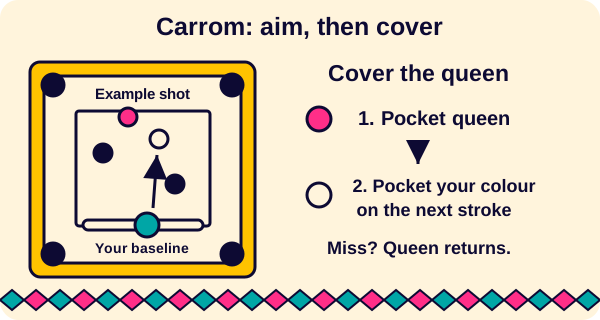
- Once you have already pocketed an own-colour piece and owe no due, you may take the queen. Pocket an own-colour piece on your next stroke to cover her. If you fail, return the queen to the centre and pass the turn.
- Queen and own piece together normally cover her. If all nine of your pieces were still on the board and only one falls with the queen, you still need a cover on the next stroke. Queen alone before any own piece goes back, and your turn ends.
- If only the striker falls into a pocket, your turn ends and one previously pocketed own piece returns inside the outer circle as a due. If none is available, record the debt and return the next available own piece.
- If a legal stroke pockets the striker with your own pieces, those pieces return plus one due, but your turn continues. Opponent pieces stay down. Improper strokes and queen combinations have further penalties; check the linked laws instead of assuming every striker foul is identical.
- Clear all nine of your pieces after either side has properly covered the queen. Pocketing your final piece while the queen remains unresolved loses the board. Keep a possible cover available rather than clearing your colour too soon.
Scoring / how to win
- In the suggested short house match, each completed board is one win; first to two wins takes the match. A board lost through an early final piece still counts as a loss.
- Under federation scoring, the board winner earns one point per opposing piece left, plus three for the queen if the winner covered her and began the board below twenty-two points. A game runs to twenty-five points or eight boards; consult the laws for tied games and penalty endings.
House rules & regional variations
- Points carrom may let everyone pocket either colour, with different values for white, black and queen. That is a separate scoring game; agree on values, queen cover and striker penalties before mixing colours.
- Some families require cushion rebounds for pieces behind the baseline. Federation play allows backward shots from a legal striker position. Say which rule your table uses before a difficult shot appears.
Tips & strategy
- Practise a gentle straight shot before trying hard rebounds. Look at the line from your target piece to the pocket, then place the striker to meet that line. More force can send the striker into a pocket too.
- Before taking the queen, point out the own-colour piece you plan to cover with. If that shot looks awkward, improve the position or take another piece first. Wait for every piece to stop before collecting the striker.
Safety & fair play
- Keep faces above and away from the board edge, small pieces away from toddlers, and drinks off the table. Do not blow powder into the air or substitute kitchen flour and household chemicals.
Questions before the first round
Can three people play this version?
Use two for singles or four for doubles. Three needs an agreed free-for-all variant.
Must I personally take the queen to win?
No. Either side may cover her; you still need to clear your own colour.
Does pocketing an opponent's piece return it?
Normally no. It stays down and helps that opponent.
Can I shoot backwards?
Yes under federation rules, from a legal baseline position.
Is the queen automatically worth fifty points?
No. Fifty belongs to some points-carrom formats, not the federation scoring explained here.
Sources & further reading
Try another game
Board games · 2–4 players
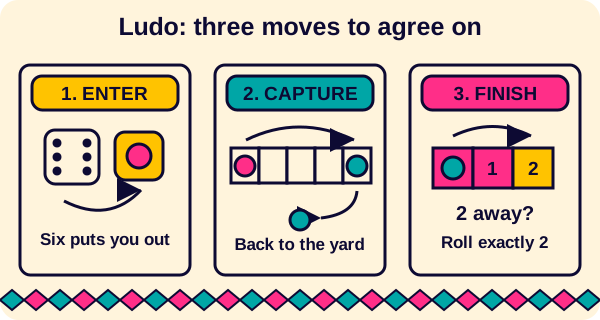
Ludo house rules — settle them before the six
A clear Ludo starter format, plus the house choices that cause arguments: entry sixes, safe squares, blocks, bonus rolls and an exact finish.
Read the rules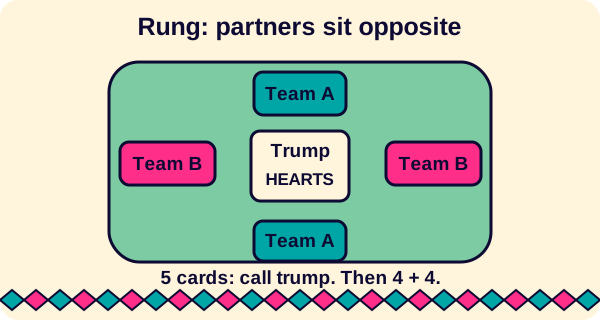
Card games · 4 players
Rung rules — how to play Court Piece
Learn four-player Rung: partners, the five-card trump call, following suit, seven-trick wins and the difference between Single and Double Sar.
Read the rules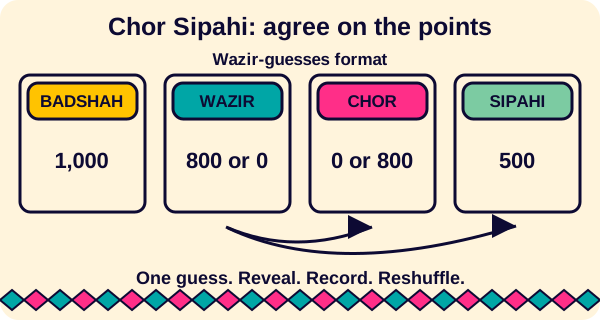
Party games · 4 players
Badshah Wazir Chor Sipahi — four chits, one guess
Make four secret role chits, let the Wazir find the Chor, and keep clear scores. Includes the Sipahi-guesses variant and larger-group options.
Read the rules