
Street & outdoor · Real-world rules
Gully cricket rules — how to play gully cricket
گلی کرکٹ
Also called Gali cricket, Tape-ball cricket, Street cricket.
Gully cricket is a short cricket match adapted to the space and players you have. Split into teams, agree overs and boundaries, then take turns batting and fielding. The higher total wins. Gali cricket and tape-ball cricket use many local rules; this guide gives you a clear starter format, with optional changes listed separately. The suggested ages and timings are planning estimates, not competition rules.
At a glance
- Players
- 4–12
- Suggested age
- 7+ with adult supervision
- Allow about
- 20–45 minutes
- Where
- Enclosed ground, School playground, Traffic-free courtyard
- Equipment
- Bat · Soft tennis or tape ball · Safe wicket markers · Chalk
Jump to a rule
What you need
- Use a soft ball and a bat that players can control. Tape changes a tennis ball's speed and bounce, so try a few deliveries before deciding whether it suits your space. A hard cricket ball needs a properly equipped ground and protective gear.
- Choose a wicket marker that will not hurt anyone who trips near it. Chalk on a wall or a light plastic stump works better than a pile of loose bricks. Keep a score sheet or use the Gully Cricket Scorer.
Setup
- Divide into roughly equal teams and name the batting order. For a first match, try four overs each with six legal deliveries per over. This is a suggested short format; agree another length if your group prefers.
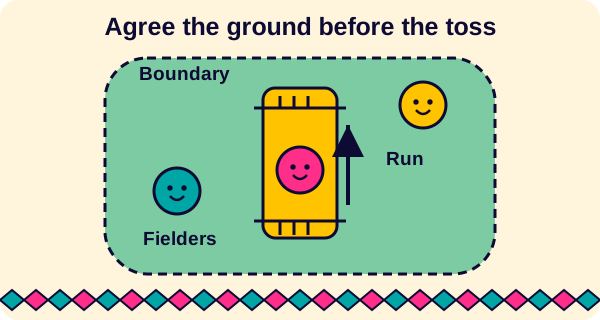
- Mark both creases, the boundary and any no-hit area before the toss. Decide whether batters will run between wickets or score through marked zones. Do not mix these systems halfway through an innings.
- Read the house rules aloud: one tip one hand on or off, no LBW or normal LBW, last batter alone or innings finished, and what happens when a ball enters a roof or garden. Toss for first choice of batting or bowling.
How to play
- The bowling team sends one bowler and spreads its fielders inside the safe play area. A batter takes strike; a second batter waits at the other crease when you are using running runs.
- Bowl the agreed style, such as underarm or a short controlled overarm delivery. The batter can hit the ball and run when it is safe. Crossing between the creases completes one run; an odd number swaps the striker.
- Call a wicket when the batter is bowled, caught before the ball lands, or run out under your agreed rules. The next batter comes in. A dropped catch or a two-bounce collection is not automatically out.
- Record each delivery immediately. In the usual six-ball over, wides and no-balls add an extra and must be bowled again. If your short-match version counts them as balls, label that change before play.
- Finish the innings at the agreed over or wicket limit, then swap roles. The chasing team wins when it passes the first total; otherwise compare scores after its final allowed ball.
Scoring / how to win
- Example: the first team makes 24. The chase needs 25 to win, not 24. If the second team finishes on 24, call a tie or use the tie-break you agreed before starting.
- A normal boundary that reaches the edge along the ground scores four; clearing it without touching the ground scores six. In a small courtyard, marked scoring zones are a house alternative. A roof penalty overrides six only if everyone agreed to it.
House rules & regional variations
- One tip one hand makes a catch after exactly one bounce out only when it is completed with one hand. It is a street-game addition, not a normal cricket catch. Decide separately whether a wall touch counts as that bounce.
- Last-man batting keeps the final batter in, with a runner or fixed-end arrangement. Write down who faces after odd runs. For beginners, ending the innings when the final partnership breaks is easier to score.
- No LBW, retirement after a set score and one bowler per over are common local choices. A window, road or neighbour's garden should be a no-hit zone with play stopped for retrieval, never an invitation to climb.
Tips & strategy
- Place fielders where the safe scoring shots go. A small ground often rewards a controlled push more than a huge swing. Rotate bowlers so one experienced player does not take every over.
- Keep one scorer and one agreed decision-maker for close calls. If nobody saw a catch clearly, settle it before the next ball rather than rewriting the score later.
Safety & fair play
- Play away from moving traffic, parked vehicles, windows and overhead wires. Stop immediately when a person enters the pitch. Never chase a ball into a road; ask an adult to retrieve it safely.
Questions before the first round
Is one tip one hand compulsory?
No. Switch it on only if both teams agree. A normal catch requires the ball not to have touched the ground.
How many players do we need?
Four can manage a small match; larger groups can form teams. Our 4–12 suggestion is for a manageable casual session, not an official limit.
Does a roof shot always mean out?
No. Roof-out is a house rule. Mark the roof as a no-hit area and explain its penalty before batting begins.
Can we play without running?
Yes. Mark one-run, two-run and boundary zones. Explain catches and wickets too, so a zone score does not accidentally overrule an out.
Is the online Gali Cricket game the same format?
It is a separate one-tap arcade game. Use the scorer tool for an actual match; do not copy arcade timing or Khala rules into an outdoor match by accident.
Sources & further reading
Try another game
Street & outdoor · 6–14 players
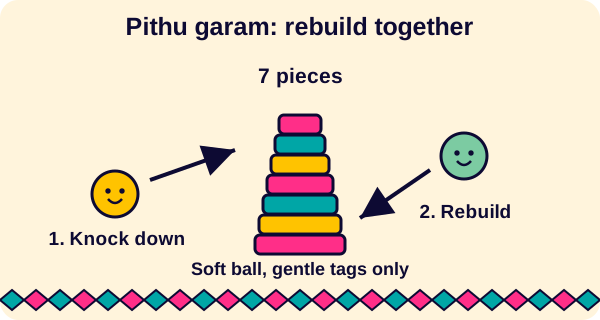
Pithu garam rules — how to play seven stones
Learn pithu garam with a soft ball: stack seven pieces, knock them down, rebuild, tag safely and agree the local rules before playing.
Read the rules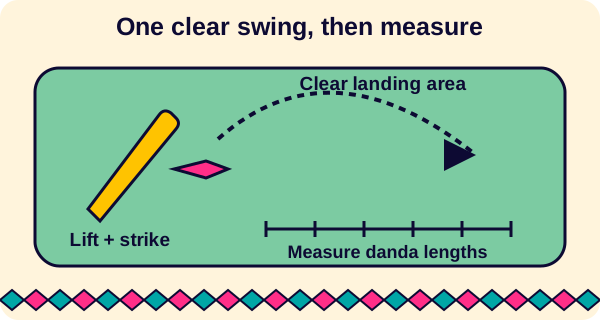
Street & outdoor · 2–10 players
Gulli danda rules — how to play the two-stick game
Learn a clear gulli danda starter format, distance scoring, catches and local return-throw rules, with essential space and safety notes.
Read the rules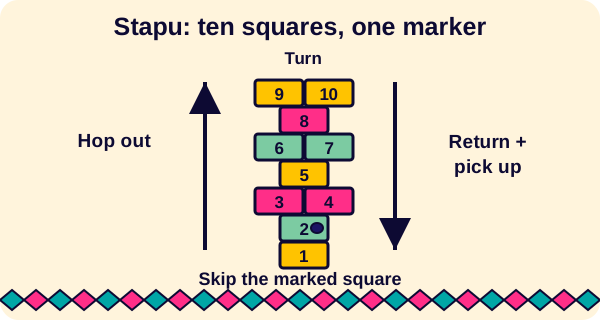
Street & outdoor · 1–6 players
Stapu rules — how to play hopscotch
Draw a stapu course, throw the marker and hop home. Clear rules for lines, paired squares, missed throws and younger players.
Read the rules