
Street & outdoor · Real-world rules
Gulli danda rules — how to play the two-stick game
گلی ڈنڈا
Also called Gilli danda, Guli danda, Vitti dandu.
Gulli danda uses a long stick, the danda, to lift and strike a short wooden gulli. A player tries to send the gulli into clear space; the distance can be measured in danda lengths. Catches, return throws and extra strikes differ between local versions. Start with the simple distance format below, then add agreed variations. This game needs generous clear space and adult supervision; the suggested age and timing are planning guides.
At a glance
- Players
- 2–10
- Suggested age
- 8+ with adult supervision
- Allow about
- 20–40 minutes
- Where
- Large clear outdoor ground
- Equipment
- Smooth danda · Short tapered gulli · Ground marker
Jump to a rule
What you need
- Use purpose-made, smooth equipment without splinters. The gulli has tapered ends so a controlled tap lifts it. The danda is longer and acts as the hitting stick and measuring unit. Do not replace the gulli with a stone or metal object.
- Mark a striking spot on a large open ground. Check the whole likely landing area, not just the space beside the hitter. A small courtyard, roof or street with pedestrians is not a suitable substitute.
Setup
- Choose individual turns for a small group or two equal teams for a larger one. Give every player the same number of turns; two turns each is a useful short-session house format.
- Agree the scoring version. In the beginner version here, a player has up to three attempts to lift and strike the gulli cleanly. A successful uncaught hit is measured from the marked striking spot to its resting position.
- Mark a waiting area behind and away from the hitter's swing. Everyone must be ready before the gulli is lifted. For beginners, use a no-catching version and retrieve only after it lands; the catch-out option is described separately.
How to play
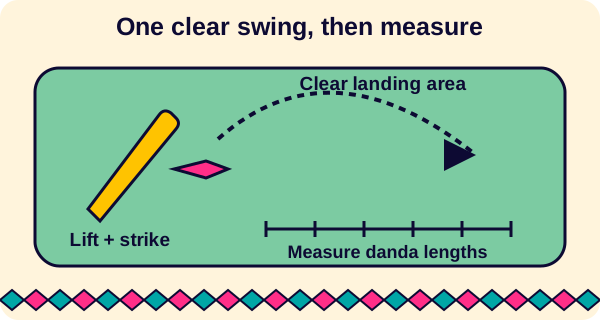
- Place the gulli at the striking spot with one tapered end accessible. Stand so the danda can move without hitting another person. Ask the group to clear the swing and landing areas.
- Tap one end with a controlled motion to lift the gulli. As it rises, strike it toward the open ground. A huge swing is not needed to learn the timing; stop and reset if the first tap sends it unexpectedly sideways.
- If the attempt misses, replace the gulli at the same spot and try again, up to the agreed attempt limit. In our starter format, three unsuccessful attempts end the turn with no distance score.
- Let the gulli land and come to rest. Keep everyone still until the hitter has put down the danda. Mark the landing position before retrieving the gulli so the measurement is not guessed afterwards.
- Measure between the start mark and landing mark using the same danda for everyone. Record complete lengths, then give the next player a turn. When both teams or all individuals have completed equal turns, add the scores.
Scoring / how to win
- One complete danda length is one point in this distance format. A hit measuring eleven full lengths and a little extra scores eleven. Counting fractions is an optional house choice; do not round up for one player and down for another.
- Example: a team records 8, 0 and 12 on its first set of turns, giving 20. Add the next equal set before comparing totals. A catch-out version gives no distance points for a hit caught before it touches the ground.
House rules & regional variations
- Catch-out: experienced players may agree that a clean catch ends the hitter's turn. A flying wooden gulli can injure hands or eyes; beginners should use the no-catching version above, with everyone away from its flight.
- Return-throw versions let a fielder aim the landed gulli back at a danda laid across a small ground groove. Hitting the target ends the turn. The exact groove, return target and next striking stage vary; explain the full sequence before using it.
- Some versions allow several strikes from where the gulli lands, or award multipliers for successful consecutive hits. These produce different totals from single-hit distance scoring. Do not combine the scoring tables casually.
Tips & strategy
- Practise lifting the gulli without a second swing first. A repeatable small tap makes the next contact easier to judge. If it spins toward the waiting area, change the setup before continuing.
- Keep the measuring danda straight and move it end to end. Assign one person to mark each completed length while another counts. This prevents a disputed big hit from holding up the whole game.
- Use turns rather than letting a strong hitter continue indefinitely. A new player learns more from several short attempts than from watching one long innings.
Safety & fair play
- Keep clear of faces, windows, vehicles and passers-by. Never swing while anyone is retrieving the gulli. Stop if the ground becomes crowded, and use a safer ball game if you cannot provide enough open space.
Questions before the first round
Is there a ball in gulli danda?
No. The short gulli is struck with the longer danda. That wooden projectile is why space and supervision matter.
How do we measure a score?
Our starter format counts complete lengths of the same danda between the striking and landing marks. Other versions use different scoring sequences.
Does every missed swing end the turn?
Not here: the player gets up to three attempts. Agree whether an attempt means a failed lift, a missed second strike or either before starting.
Is a return throw compulsory?
No. It belongs to particular local versions. The beginner distance game can be played without it.
Can two people play?
Yes, by alternating equal individual turns. Extra players can form teams, but keep everyone out of the active striking area.
Sources & further reading
Try another game
Street & outdoor · 4–12 players
Gully cricket rules — how to play gully cricket
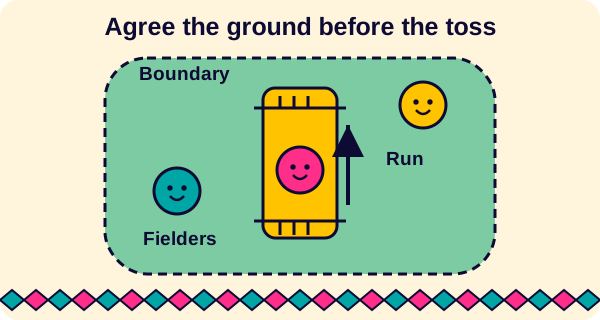
Settle gully cricket rules before the toss: teams, overs, one tip one hand, roof shots, last-man batting and a simple score example.
Read the rules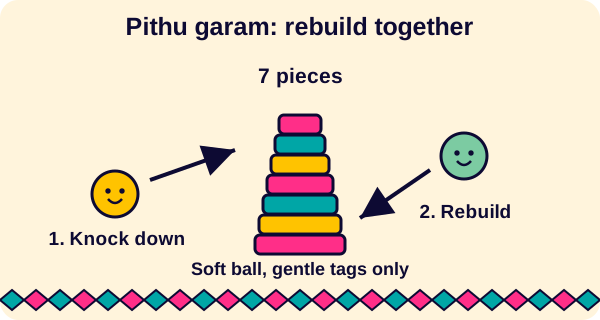
Street & outdoor · 6–14 players
Pithu garam rules — how to play seven stones
Learn pithu garam with a soft ball: stack seven pieces, knock them down, rebuild, tag safely and agree the local rules before playing.
Read the rules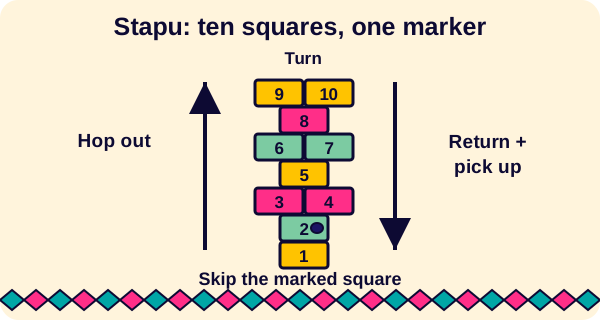
Street & outdoor · 1–6 players
Stapu rules — how to play hopscotch
Draw a stapu course, throw the marker and hop home. Clear rules for lines, paired squares, missed throws and younger players.
Read the rules