
Card games · Real-world rules
Bluff card game rules — claims and challenges
بلف
Also called I Doubt It, Cheat.
Bluff is a card-shedding game where face-down cards may not match the claim made about them. Challenge correctly and the other player collects the pile; challenge wrongly and you collect it. Families play several versions. This guide chooses a same-rank round with a clear pass rule, then explains the changing-rank alternative.
At a glance
- Players
- 3–6
- Suggested age
- 8+ with guidance
- Allow about
- 15–30 minutes
- Where
- Indoor table, Family sitting room
- Equipment
- Standard 52-card pack · Clear table
Jump to a rule
What you need
- Remove jokers for the first game and check the pack is complete. Keep a clear central space for the pile and leave hands visible enough that everyone can see how many cards a person holds, without seeing their faces.
- There is no money or prize pot in this format. If somebody dislikes bluffing, explain that a false card claim is part of the agreed game. It does not make them dishonest outside the game, and teasing should stop when asked.
Setup
- Deal the full pack around the table. A few hands may contain one extra card. For our family version, the player left of the dealer opens the first round; rotate the dealer for the next game.
- The opener names a rank, such as queens, and places one to four cards face down while stating how many they played. Every later claim in that round uses the same rank. Suits do not matter.
- Agree that passing removes you from further card plays in that round, though you may still challenge. When a round ends, everyone can play again. This is the pass-out convention used for the Bluff variant described by Pagat.
How to play
- On your turn, put down a clearly counted group of cards and claim the round's rank, or say pass. Leave the latest group slightly separate until the next player acts so a challenge can inspect the right cards.
- After a play, anyone may call “Bluff” before another group is placed. Pause immediately and reveal only the latest claimed group. Older cards in the pile are not evidence about this new claim.
- If any revealed card has the wrong rank, the player who made the claim takes the whole pile. If all match, the challenger takes it. The player who won the challenge starts a new round and chooses a new rank.
- If everyone passes, put the pile aside without showing it; the last person who played opens a fresh round. For our version, players announce clearly when they have passed so nobody is counted out by accident.
- A player who empties their hand must allow the usual challenge opportunity before being declared the winner. If their last claim fails, they collect the pile and keep playing. Otherwise that game ends.
Scoring / how to win
- You can play for a simple first-place finish with no points. For a longer family session, award one win per game and rotate the starting player. A short “first to three wins” match is our suggested option, not a universal Bluff rule.
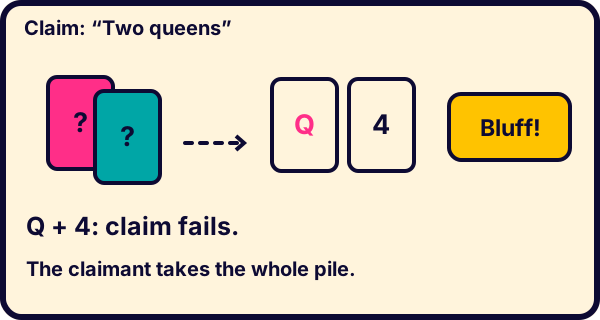
- Example: Ali announces two queens, and Sara challenges. One card is a queen and one is a four. Ali takes every card in the pile, including the latest two. Sara opens the new round; revealing one correct card did not rescue the whole claim.
House rules & regional variations
- In the changing-rank version commonly called Cheat, claims move through aces, twos and onward around the table. It has a different rhythm and may require a player to bluff when they lack the current rank. Choose one system before dealing.
- Some groups use jokers as always-valid cards or continue until everyone has a finishing place. Keep both switched off for a first game. Adding wild cards changes what a player can infer from the four ordinary cards of a rank.
Tips & strategy
- Remember cards you have actually seen rather than trying to interpret every smile. For a practice example, holding three nines makes a claim of two nines suspicious in a single pack, but a player could still be making a deliberate false claim.
- Do not rush the next turn to deny a challenge. A brief pause is enough. If two calls happen together, let the first clearly heard challenger act and settle that order before turning any cards over.
Safety & fair play
- Keep claims playful and directed at the cards: “I think those are not queens” is clearer than insulting the player. Avoid slapping hands or grabbing the pile. Let one person reveal the cards while everyone else waits.
Questions before the first round
Can I lie about the cards?
Yes, within the announced game rules. You still state the real number of cards in this version; hidden extra cards are not allowed.
Can I pass and return in the same round?
Not in our selected pass-out version. You may challenge, then join card play again when a new round starts.
Which cards are shown after a challenge?
Only the latest group. The whole pile is the penalty, but older claims are not retried.
Can the final play be challenged?
Yes. Emptying a hand does not protect a false claim from its final challenge.
Is Bluff always played with one fixed rank?
No. Fixed-rank and changing-rank games both exist. State the version clearly so nobody mixes them during play.
Sources & further reading
Try another game
Card games · 3–8 players
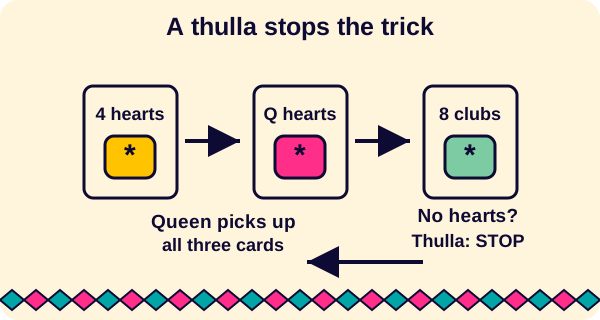
Bhabhi rules — how to play Get Away
Learn Bhabhi with clear examples: follow suit, stop on a thulla, pick up the pile and handle the opening round and final-card exceptions.
Read the rules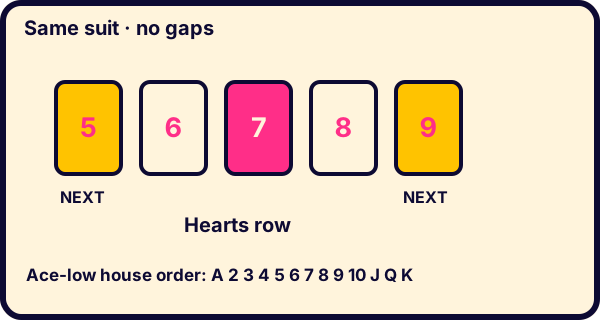
Card games · 3–6 players
Satti rules — build each suit from seven
Play Satti with suit rows starting at seven. Learn legal moves, passing, an ace-low family layout and a worked end-of-round score.
Read the rules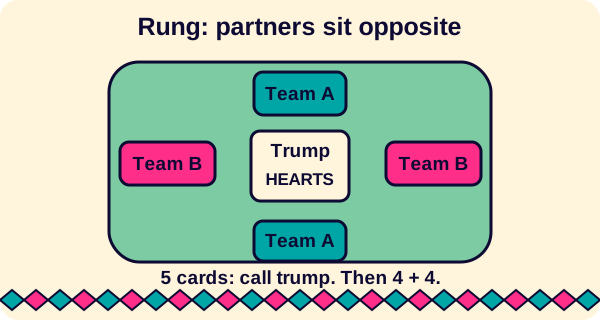
Card games · 4 players
Rung rules — how to play Court Piece
Learn four-player Rung: partners, the five-card trump call, following suit, seven-trick wins and the difference between Single and Double Sar.
Read the rules