
Street & outdoor · Real-world rules
Chupan chupai rules — how to play hide and seek
چھپن چھپائی
Also called Chhupan chhupai, Lukan chupai, Lukan mitti, Hide and seek.
Chupan chupai is hide and seek: one player closes their eyes and counts while everyone else hides. The seeker then finds the hidden players. Finish the round when everyone is found and give the next person a turn. Lukan chupai and lukan mitti are related names. Home-base races are a separate variation; decide whether you are playing them before anybody hides. Ages and session lengths here are suggestions.
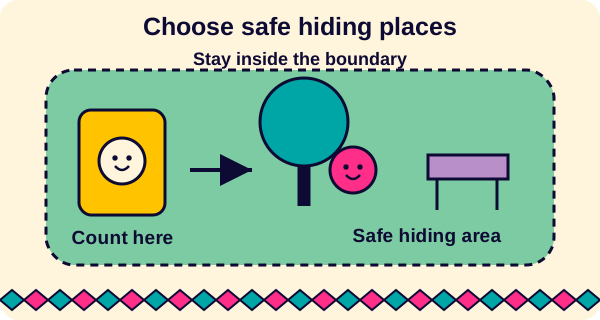
At a glance
- Players
- 3–12
- Suggested age
- 5+ with adult supervision
- Allow about
- 10–25 minutes
- Where
- Home with agreed rooms, Enclosed garden, Supervised playground
- Equipment
- None · Optional timer
Jump to a rule
What you need
- Choose an area with several safe hiding places and a clear gathering point. You can play without equipment. A timer is useful when a round needs an ending even if one person has found a very good hiding place.
- With younger children, an adult should know the allowed area and remain easy to find. Count the players before each round. A hiding game should never leave the group unsure whether someone has left the play area.
Setup
- Name the permitted rooms or outdoor boundary. Be specific: 'behind these two benches' is clearer than 'around here'. Mark cupboards, vehicles, roofs, balconies and places behind locked doors as out of bounds.
- Choose a seeker fairly and agree the count. Twenty slow counts works as a starter house choice in a small area; a larger enclosed space may need more. The seeker faces the counting point with eyes covered, without peeking.
- Choose the next-seeker rule. A simple option is first found becomes the next seeker. A fixed rotation also works and prevents one younger player from having to search every round. Explain the stop call everyone must answer.
How to play
- The seeker starts counting aloud. Hiders move to an allowed spot without moving furniture or closing themselves into a box. In the basic version, choose one hiding place and stay there.
- At the end of the count, the seeker announces that searching has started. The seeker looks carefully around the allowed area, without pulling curtains hard, opening private drawers or climbing to get a better view.
- When the seeker can clearly identify a player, they call that person's name and hiding spot. Agree this visible-find rule in advance; it avoids a surprise chase when players expected a quiet hiding game.
- Found players return to the gathering point. They do not point at the remaining hiders or deliberately give their hiding places away. If your group wants found players to help search, label that as a different version.
- End the round when everyone is found or when the agreed stop signal sounds. Every hider responds and returns, even if still undiscovered. Count everyone, then begin the next round with the chosen seeker.
Scoring / how to win
- The basic game needs no points. Being last found is a small win for that round, but it does not automatically decide the next seeker unless your group has chosen that rule.
- For a short scored session, try one point for being the last hider found and give everyone an equal number of seeking turns. A shared hiding spot can produce a joint last place. Agree this scoring option before starting.
House rules & regional variations
- Home-base chupan chupai adds a marked safe point. After the count, hiders may leave cover and try to reach it before being tagged. This changes both movement and the way players are caught; use a clear route with room to stop.
- Some groups let hiders change places once searching starts. Others require them to remain still. Both versions work, but mixing them leads to disputes about whether the seeker already checked a spot.
- In a searching-team version, found players join the seeker. For younger children, hide an object instead of a person and let everyone search. Neither variation needs surprise contact or frightening hiding places.
Tips & strategy
- Pick a hiding place you can leave comfortably. A visible shoe may give you away, but squeezing deeper into an unsafe gap is not a sensible fix. Choose another spot next round.
- Seekers can check one section at a time and remember where they have looked. Listen without demanding total silence from everybody nearby; other people may be using the same house or garden.
- Do not change the boundary to make a clever hiding place count. If a spot caused uncertainty, finish the round and agree whether it is allowed next time.
Safety & fair play
- Never hide in appliances, containers that can close, vehicles, roofs or near roads and water. Do not lock a door or climb outside a window. Everyone must answer the stop call immediately, and an adult should supervise children's outdoor games.
Questions before the first round
How long should the seeker count?
Agree a count suited to the space. Twenty slow counts is our small-area starting suggestion; there is no universal chupan chupai number.
Does the seeker have to touch a hider?
Not in the basic visible-find version above. Tagging is used in some home-base variants, which should be explained separately.
Can I change hiding places?
Only if the group has agreed to a moving-hiders version. Stay in your original spot in the beginner format.
Who seeks after the first round?
Use first found or a fixed rotation. Decide before the first count rather than after somebody loses.
What happens if nobody finds the final player?
Use the agreed stop call or timer. The last hider returns and the group counts everyone before another round; do not leave someone hidden indefinitely.
Sources & further reading
Try another game
Street & outdoor · 4–16 players
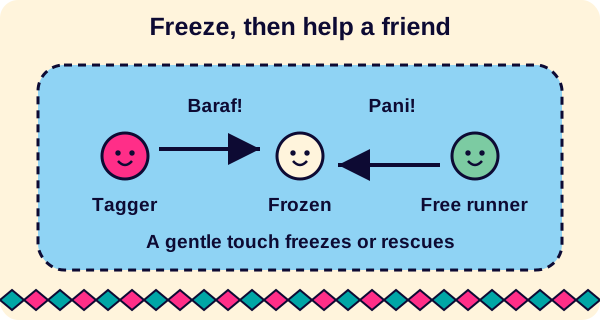
Baraf pani rules — how to play freeze tag
Play baraf pani with clear tagging, freezing and rescue rules. Includes a simple round format, fair rescues and walking adaptations.
Read the rules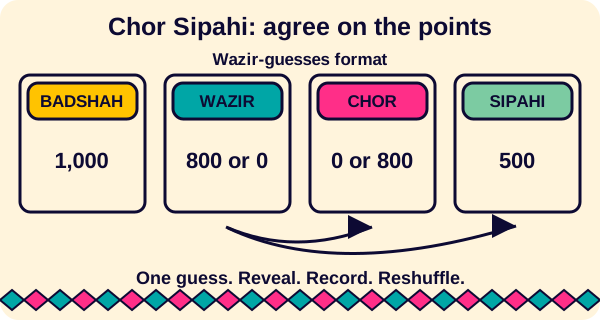
Party games · 4 players
Badshah Wazir Chor Sipahi — four chits, one guess
Make four secret role chits, let the Wazir find the Chor, and keep clear scores. Includes the Sipahi-guesses variant and larger-group options.
Read the rules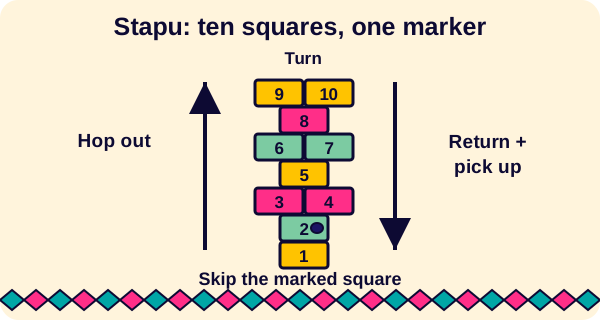
Street & outdoor · 1–6 players
Stapu rules — how to play hopscotch
Draw a stapu course, throw the marker and hop home. Clear rules for lines, paired squares, missed throws and younger players.
Read the rules