
Classics
Ludo rules, Pakistani house rules and 7 practical strategy tips
Ludo is a race to move all your tokens from their starting yard, around the shared track and into home. A die supplies the moves, but you usually choose which token uses them. Families disagree about opening rolls, safe squares and bonus turns. Before you play, agree those house rules. It is much easier than negotiating them after someone rolls a third six.
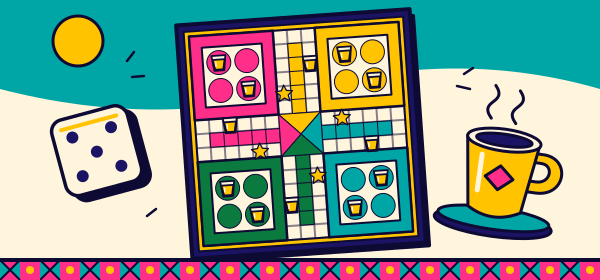
Set up the board and take a turn
A familiar Ludo board has four colours, with four tokens for each player and one die. Each player chooses a colour and puts their tokens in the matching starting yard. Follow the entry square and direction shown by your board's instructions. The Funskool rulesheet is one published example; a different set or app may use different details.
In the common six-to-open version, rolling a six lets you bring a token out. Once tokens are on the track, choose one legal token and move it the full value of the roll. You cannot normally split a single roll between tokens. If no legal move exists, the turn passes, subject to any extra-roll rule your group uses.
Captures, safe spaces and the exact finish
Landing on an opponent's lone token on a capturable square sends that token back to its starting yard. Merely passing it does not capture it. Some boards mark safe squares where captures are not allowed. Other versions handle shared squares or two tokens together differently, so check before relying on a blockade.
After travelling around the shared track, a token enters its own coloured home lane. The usual exact-finish rule means you must roll the precise remaining distance to finish that token. If it needs two and you roll five, choose another legal move if one exists. The first player to finish all four tokens wins in this standard race format.
Pakistani house rules: agree your version
There isn't one official set of Pakistani family rules. These are familiar choices you may encounter, not claims that every household plays alike. Read the rule labels in an app instead of assuming it matches the board you grew up with. A capture bonus can make an otherwise risky move worthwhile; turning it off changes that decision.
Pay special attention to three consecutive sixes. Some groups cancel only the third roll; others cancel more of the turn. Say exactly what is forfeited. Also decide whether opening a token consumes the six and whether finishing a token earns another roll. Writing a short agreed version beside the board prevents accidental mid-game changes.
- Opening: a six is required, or a quicker opening rule is allowed.
- Extra rolls: a six grants another roll, with a clear rule for three sixes.
- Captures: returning an opponent to the yard may or may not grant another turn.
- Protection: identify safe squares and settle whether tokens can form blocks.
Tip 1: get more than one token working
A single token gives you very few decisions. Bringing a second token into play can let you use a roll that would be awkward for the first. Don't make this automatic: if opening leaves an advanced token within an easy capture, compare the danger first. The useful habit is to check both options before moving the token nearest your hand.
Tip 2: count the opponent's route to you
Count along the track from each nearby opponent to your proposed landing square. An opponent one ordinary roll behind can threaten you on their next turn. This isn't a certainty, and extra turns can extend their reach. It is a quick way to notice exposure instead of discovering the danger after you've moved. Remember that the starting square may introduce a new threat too.
Tip 3: compare a capture with a safe landing
Sending another token back feels satisfying, but look at where your token will finish the move. A capture that places it directly in another opponent's reach may trade away a lot of progress. If your rules award a capture bonus, include that extra opportunity in the comparison. If they don't, judge the move on the position it actually leaves.
Tip 4: protect progress near the home lane
A token close to its own protected lane has a lot to lose if captured. When two moves make similar progress, consider moving that exposed token into safety. You may give up an immediate chase, but you keep a nearly completed journey. This is a practical priority rather than a rule: the other tokens and the next player's position still matter.
Tip 5: keep useful choices for small rolls
Near the finish, tokens often need exact small numbers. If all your unfinished tokens need the same number, many rolls become unusable. When you have a real choice, consider leaving different finishing distances available. You cannot control the die, and you shouldn't refuse a clear win to create variety. The point is to notice flexibility when neither move finishes the game.
Tip 6: use safe squares with a purpose
A safe square is useful when it shelters a token while another advances. Staying there forever does not complete the race. Ask what the protected token is waiting for: a clearer route, a better move elsewhere or a chance to escape a nearby threat. If none applies, progress may be more valuable than keeping a token comfortable.
Tip 7: pause before every bonus roll
A six can change the board twice in quick succession. Finish the current move, check which tokens remain legal and then roll again. Don't assume the same token should use both results. During pass-and-play, announce the move so everyone follows it. That tiny pause catches counting mistakes and keeps a friendly match from becoming an argument about what just happened.
What these tips can and cannot do
Good choices can preserve progress and make more rolls useful. They cannot guarantee a particular result from a fair die. Treat a surprising loss as part of the game rather than evidence that you needed a secret opening trick. Chai Games is preparing its own Ludo game for the classics collection; the games directory below shows what is currently available.